
Fire safety in a commercial building is not a one-off job. It depends on the fabric of the building, the systems inside it, and every alteration, repair and installation made over its life. This guide is for owners, landlords, estates teams and facilities managers. It covers the legal duty, the fire risk assessment, and the points where building work, roofing and solar installations can quietly weaken a building’s fire protection.
It is general guidance for England and Wales, not a substitute for a fire risk assessment of your own building by a competent assessor.
The legal duty in one paragraph
The Regulatory Reform (Fire Safety) Order 2005 covers almost every non-domestic building. It places the duty on the “responsible person”: usually the employer, owner, landlord or whoever controls the premises. In multi-let buildings there may be several, and they must coordinate. Each must have a suitable fire risk assessment, and since October 2023 it must be recorded in writing in full, whatever the size of the organisation.
Why buildings drift out of compliance
Most buildings were compliant when they were built or last refitted. The problems creep in afterwards. A new cable run is pushed through a fire wall and never sealed. A fire door is swapped for a cheaper one during a refurbishment. A suspended ceiling is opened up for a new air-conditioning unit and not reinstated properly. A partition moves and an escape route grows longer. None of these looks dramatic, but together they undo the protection the building was designed with.
That is why the fire risk assessment should be reviewed whenever the building, its layout or its use changes, not just on a calendar date.
Building work and refurbishments
Any alteration to a commercial building has to keep, or improve, its fire performance. Building Regulations guidance in Approved Document B sets out what is expected for means of escape, compartmentation, fire doors and access for the fire service. On a refurbishment, the points we check before work starts are:
- Compartment walls and floors. Every new hole for pipes, cables or ducts needs to be fire stopped with the right tested product for that wall or floor.
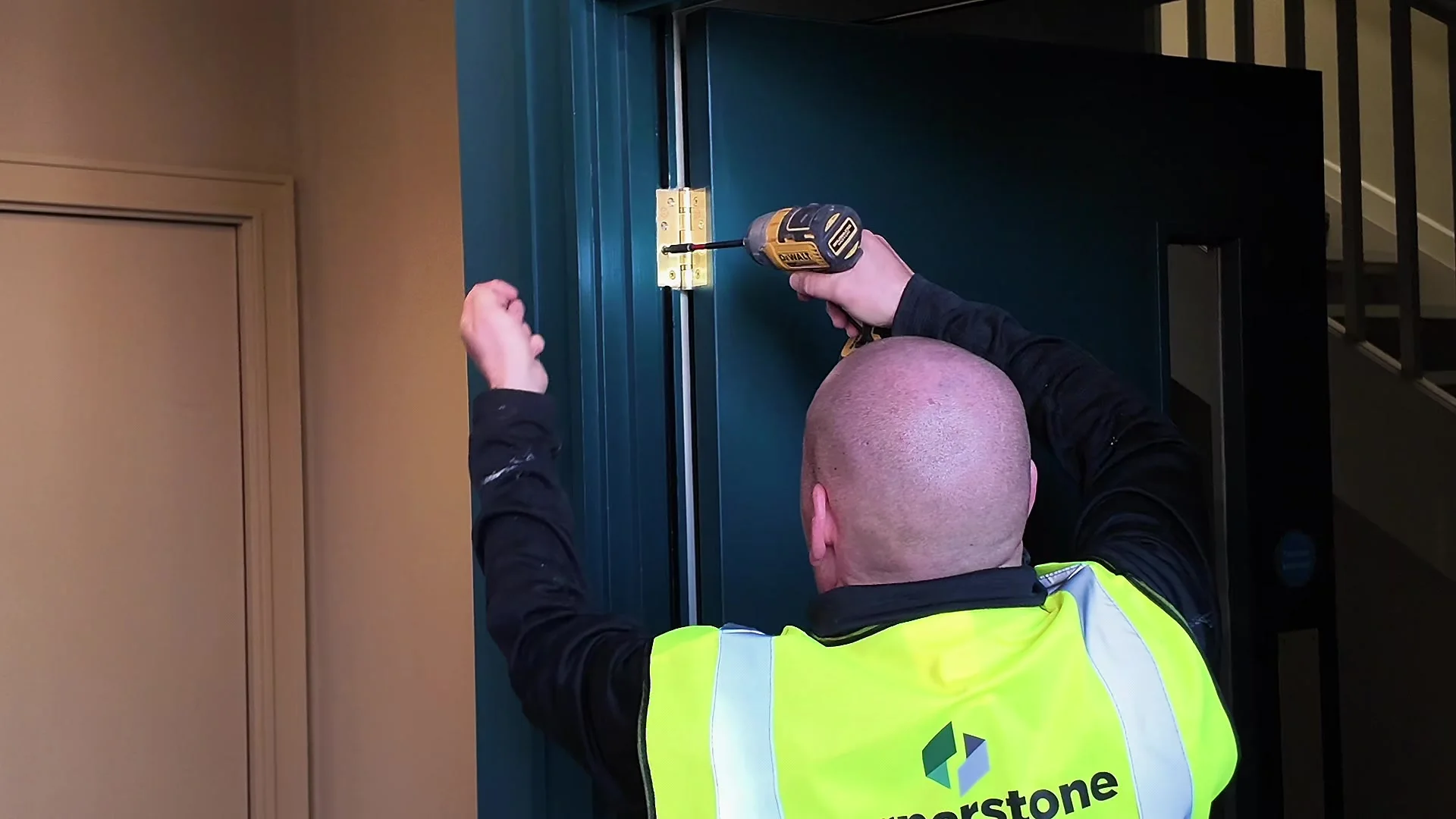
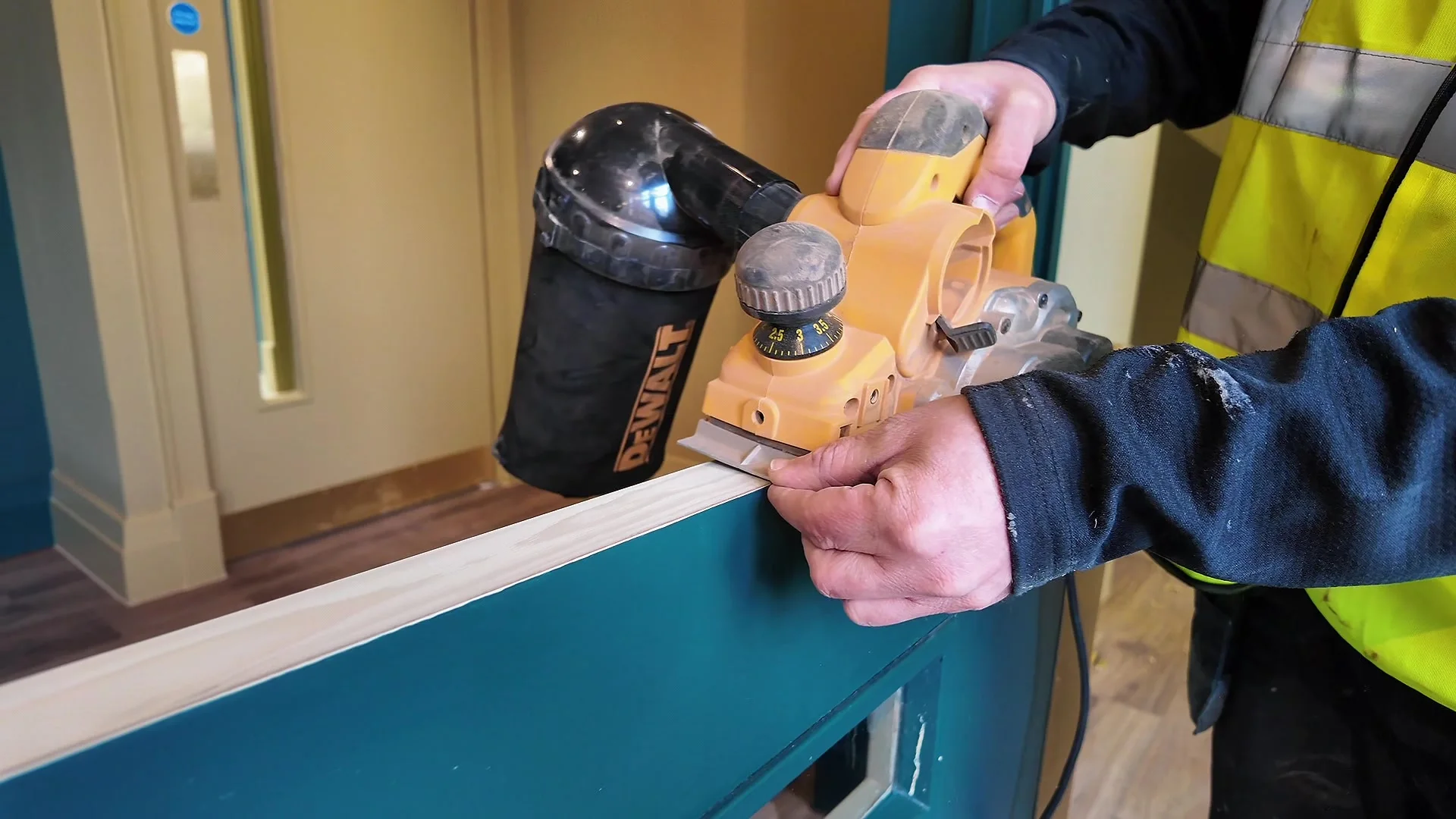
- Fire doors. Doors, frames, glazing, hinges, closers, intumescent strips and smoke seals all have to match the rating needed, commonly 30 minutes (FD30) or 60 minutes (FD60).
- Escape routes. New layouts must not lengthen travel distances or block exits, and emergency lighting and signage must follow the new layout.
- Fire alarm coverage. New rooms and voids need detection, and the system is extended or redesigned to BS 5839-1.
- Records. What was installed, where, and with which product, so the next assessor can see it.
Roofing and hot works
Roof work brings its own fire risks. Traditional torch-on felt roofing uses open flame, and fires started during roofing work are a well-known cause of serious building losses. On occupied commercial buildings we control this in three ways: a hot work permit system with fire watches during and after the work, keeping flame away from vulnerable details such as timber decks and roof voids, and using cold-applied systems where the risk is high. Our liquid roofing systems and many flat roof overlays need no naked flame at all.
Solar PV and fire safety
Rooftop solar is safe when it is designed and installed properly, and insurers increasingly expect it to follow recognised guidance such as the RC62 recommendations for fire safety with PV installations. In practice that means a roof in good condition before the panels go on, correct DC cabling and connectors, clear labelling, isolation the fire service can find, and access and spacing on the roof. It is one reason we survey, and if needed re-roof, before installing commercial solar.
What a fire risk assessment usually asks you to fix
When we are handed an assessment to close out, the actions usually fall into a few groups:
- Fire doors that do not close on their own, have large gaps, missing seals or the wrong ironmongery.
- Compartmentation breaches in walls, floors, ceiling voids and service risers.
- Fire alarm faults: gaps in coverage, ageing panels or missing servicing records.
- Escape routes that are obstructed, poorly lit or badly signed.
- Housekeeping and management: storage, training, drills and the log book.
Routine checks keep you on top of it: a weekly fire alarm test with a professional service at least every six months, monthly emergency lighting checks with a full-duration test each year, regular fire door inspections, and a log of everything.
Enforcement and insurance
Local fire and rescue services enforce the Fire Safety Order. They can issue enforcement notices with deadlines, prohibition notices that restrict or close premises, and in serious cases prosecute, with unlimited fines and up to two years in prison. Insurers may also decline claims where a building was not compliant, so closing out assessment actions protects the business as well as the people in it.
A worked example: Preston Grasshoppers
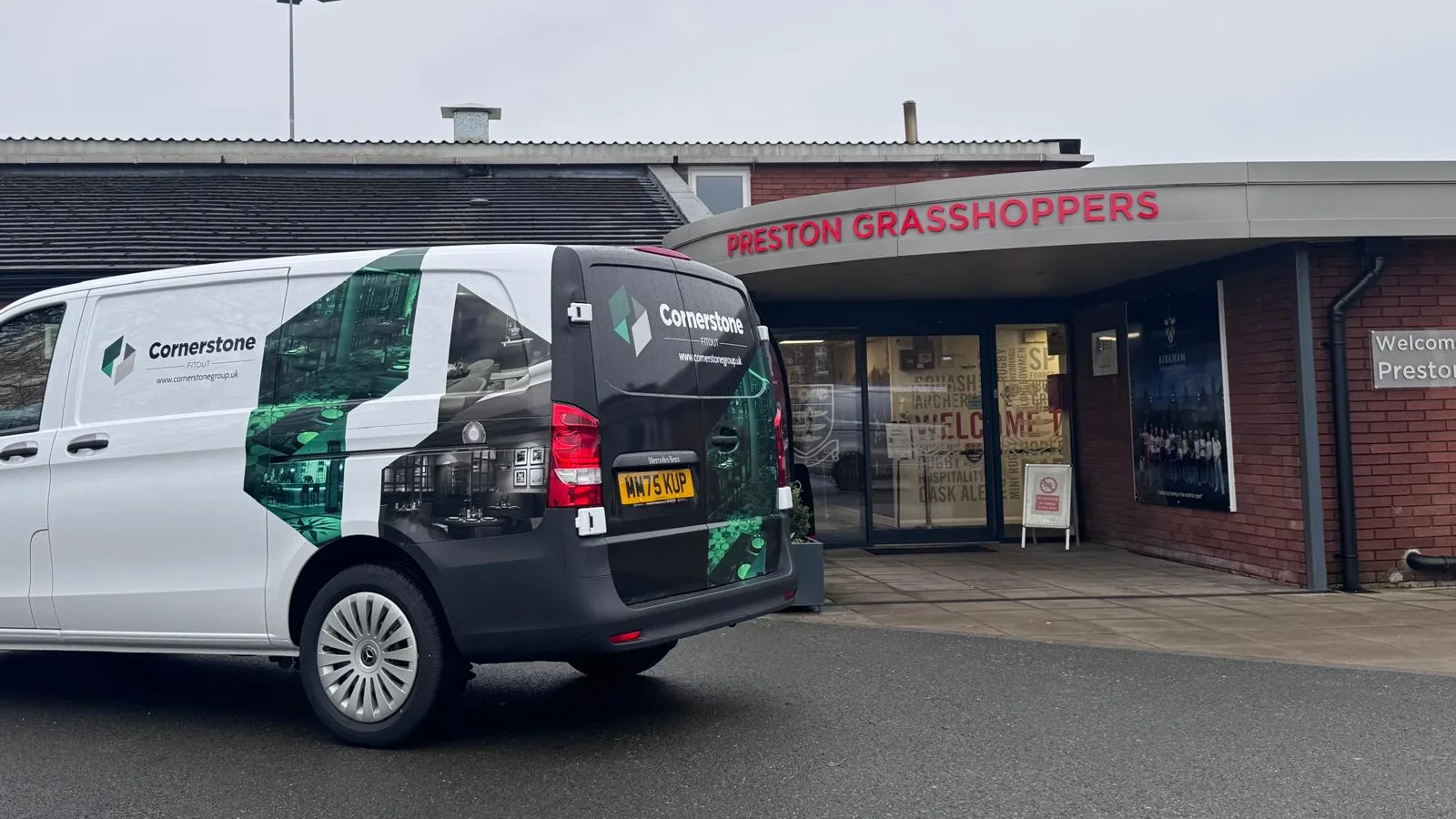
After the rugby club’s fire risk assessment, our fit-out team fitted new fire doors, sealed the compartmentation breaches and installed a full new fire alarm system, closing out the actions in one coordinated package. Read the Preston Grasshoppers case study, or the Cornerstone Fitout site for more on fire door installation.
Because our group covers construction, roofing, solar and fit-out, we can also make sure your next refurbishment, re-roof or solar installation leaves the building’s fire protection stronger than it found it.
Planning work on a commercial building?
Send us your fire risk assessment or tell us about your project. We will price the remedial works or plan your refurbishment, roof or solar installation so fire safety is built in. Tell us about your building or call us free on 0800 011 9758, Monday to Friday 8am to 5pm.
This guide covers England and Wales and reflects the rules as we understand them in November 2026. Scotland and Northern Ireland have their own legislation. Always follow the advice of your fire risk assessor, your insurer and your local fire and rescue service.
Power your business with solar.
Our renewables team designs, installs and maintains commercial solar, storage and EV charging across the North West and the UK.