
If you farm in or near a National Landscape or National Park and have a traditional building that is slowly falling apart, the Farming in Protected Landscapes programme may help pay to put it right. We restored a 17th-century barn at Fober Farm in the Forest of Bowland with FiPL funding. This guide explains how the programme works, using that project as a worked example.
The project itself is covered in our Fober Farm case study and project spotlight. Here we focus on the funding: what FiPL is, who can apply, how the process runs and how to make the most of it.
What is Farming in Protected Landscapes?
Farming in Protected Landscapes (FiPL) is a Defra programme that funds one-off projects on farms in and around England’s National Landscapes (formerly Areas of Outstanding Natural Beauty), National Parks and the Broads. It is run locally, by the team for each protected landscape, so the people you speak to know your area and its buildings.
It is not an agri-environment scheme. Instead it pays for specific projects that deliver at least one of four outcomes:
- Climate: storing more carbon, reducing flood risk or cutting emissions on the farm
- Nature: more and better-connected habitats
- People: more opportunities for the public to discover and enjoy the landscape
- Place: conserving historic structures and features, and the character of the landscape
Restoring a traditional barn falls squarely under place. Defra’s guidance names conserving historic features on a farm as the kind of project it will fund. The programme has been extended to March 2029, but it is competitive, and local funds can close early once they are allocated.
Who can apply, and how much it pays
The programme is open to farmers and land managers whose land is in a National Landscape or National Park, and to those just outside one, as long as the project benefits the protected landscape and supports its management plan.
How much it covers depends on who benefits. According to Defra’s guidance, you could get up to 100% of the cost if you will not make a commercial gain from the project. Where the farm business does benefit, the programme funds a share of the cost, depending on how much it benefits your business compared with the public. Where a project matches a Countryside Stewardship activity, it is paid at the Stewardship rate.
There is one commitment to plan for: a restored building must be maintained for 5 years from completion.
How the process works
Talk to your local team first
Before you apply, Defra asks you to discuss the project with your protected landscape team. They may visit to talk it through, and they will tell you whether it fits their priorities and what evidence they need. In the Forest of Bowland, that is the Forest of Bowland National Landscape FiPL team.
Shape the project properly
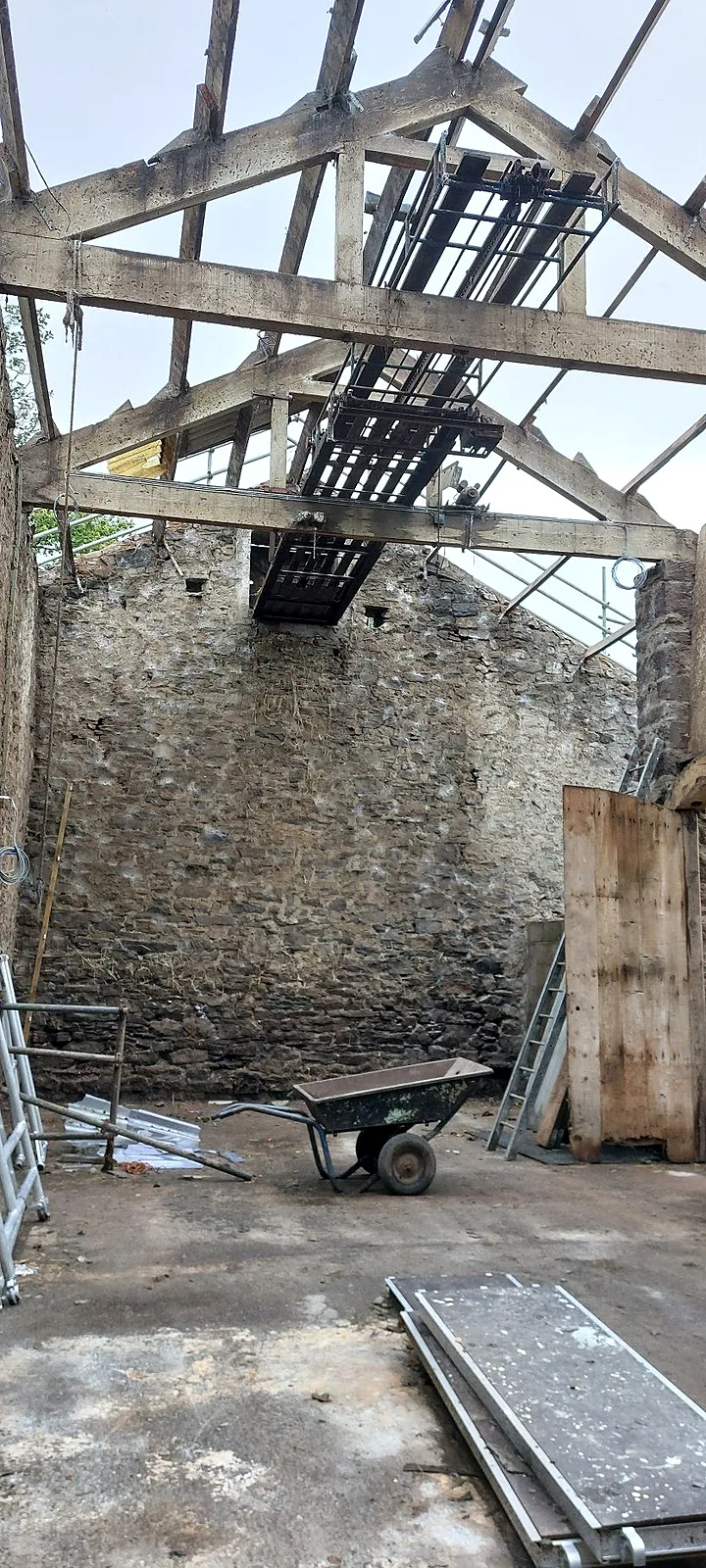
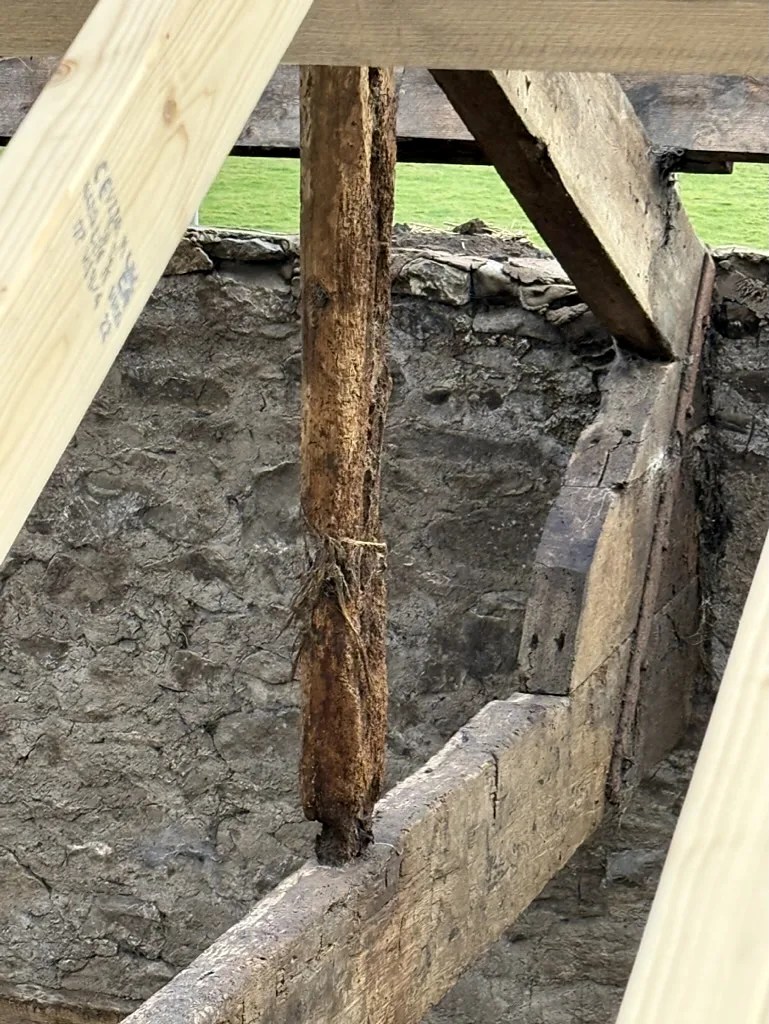
For a historic building, that means a survey before anything else. At Fober Farm, conservation architects and structural engineers assessed the barn’s structure and its historic features, and a full specification and bill of quantities were drawn up. A clear scope gives the funders confidence and gives you accurate prices.
Apply and wait for the decision
Application forms come from your local team. Applications over £10,000 go to a local assessment panel, typically made up of the protected landscape body, Natural England, local farmers and land managers, and specialists. Panels usually meet every 6 to 8 weeks, so build that into your timing.
Deliver, record and report
Once your project is approved, the work has to be delivered to the agreed scope and timescale, with the funding body kept informed. Good records, including photographs before, during and after, make the final stages far easier for everyone.
The roof
Fober Farm: a worked example
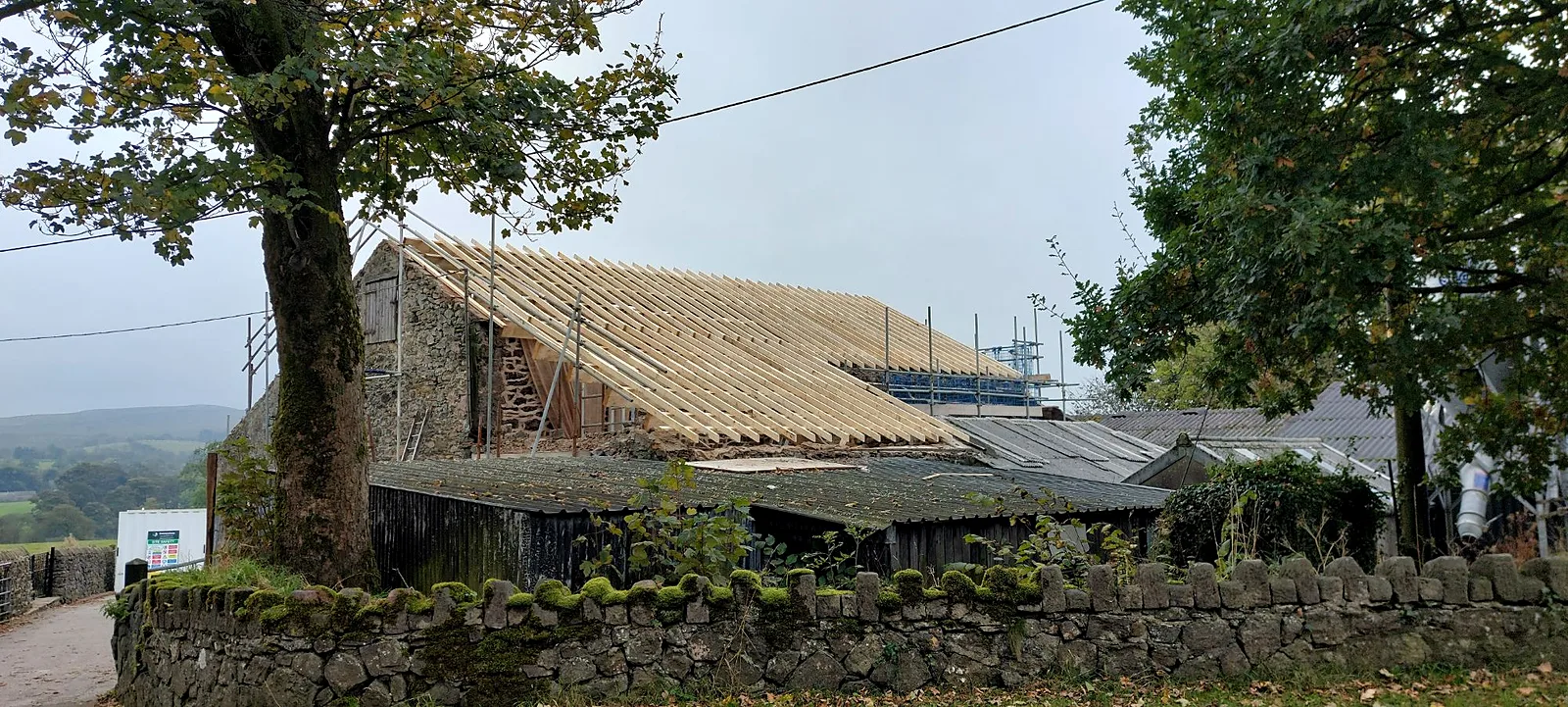
The barn belongs to the Parker family, who have farmed the land for generations and use it for cattle rearing and lambing. The project, carried out in partnership with the Forest of Bowland National Landscape and funded through FiPL, set out to return the 17th-century barn to its original condition, so it could serve the farm properly again.
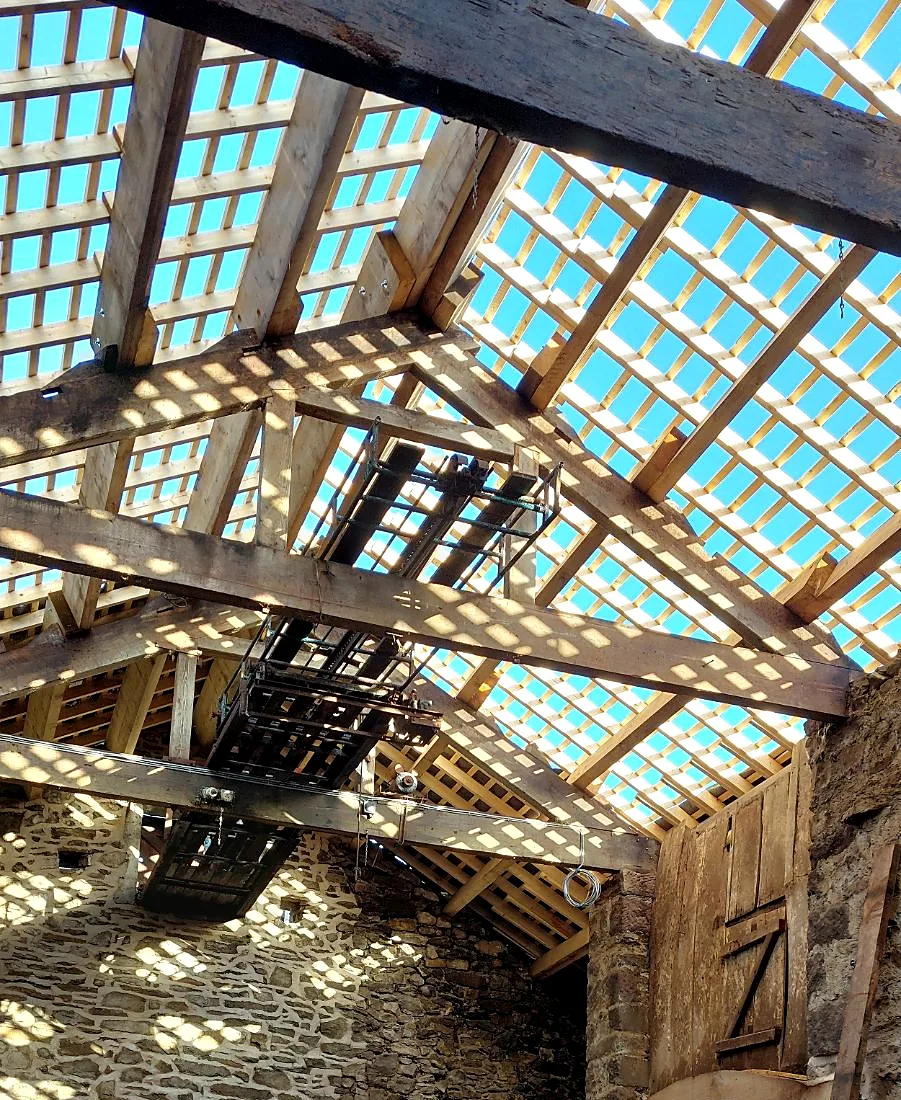
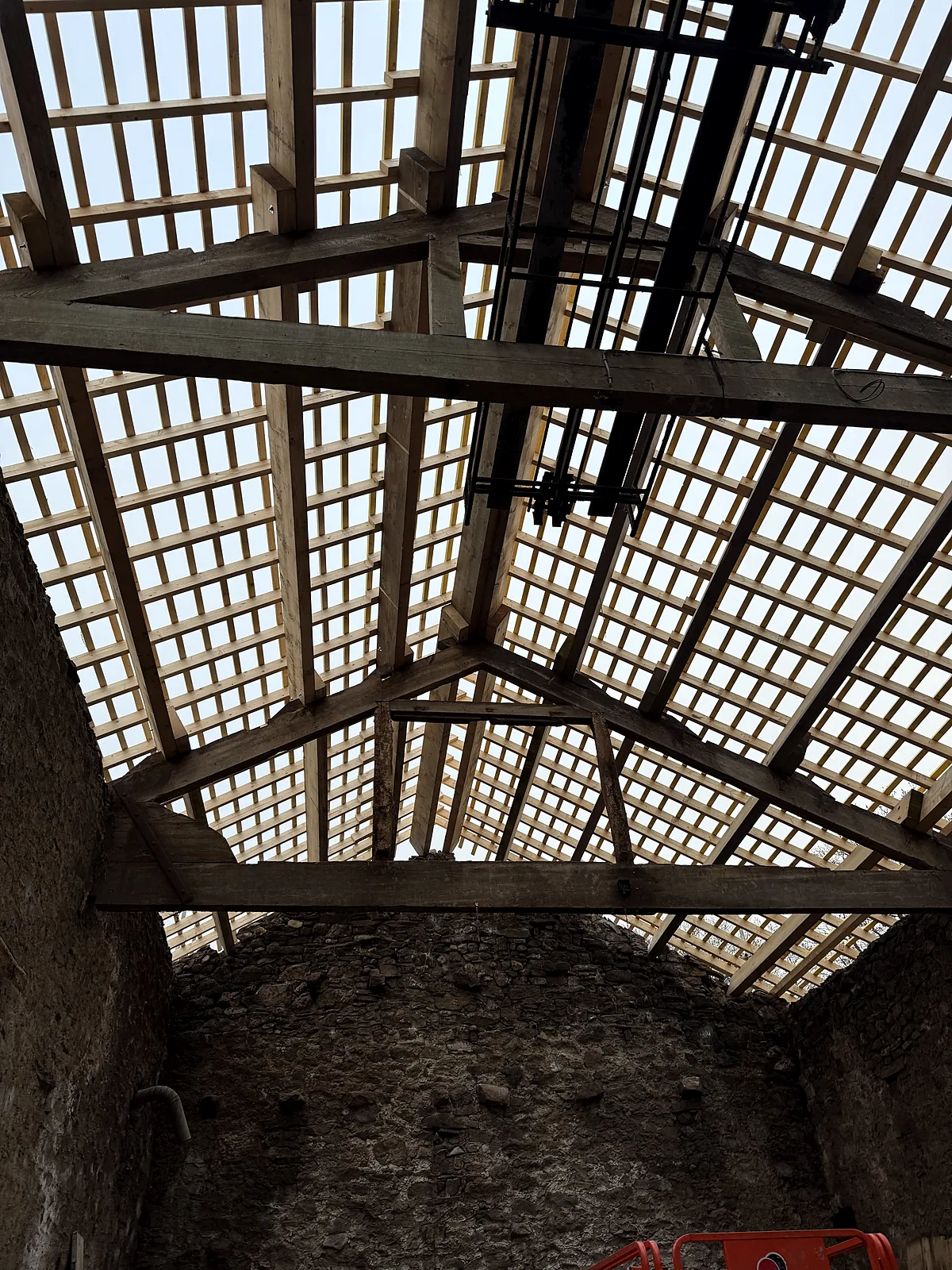
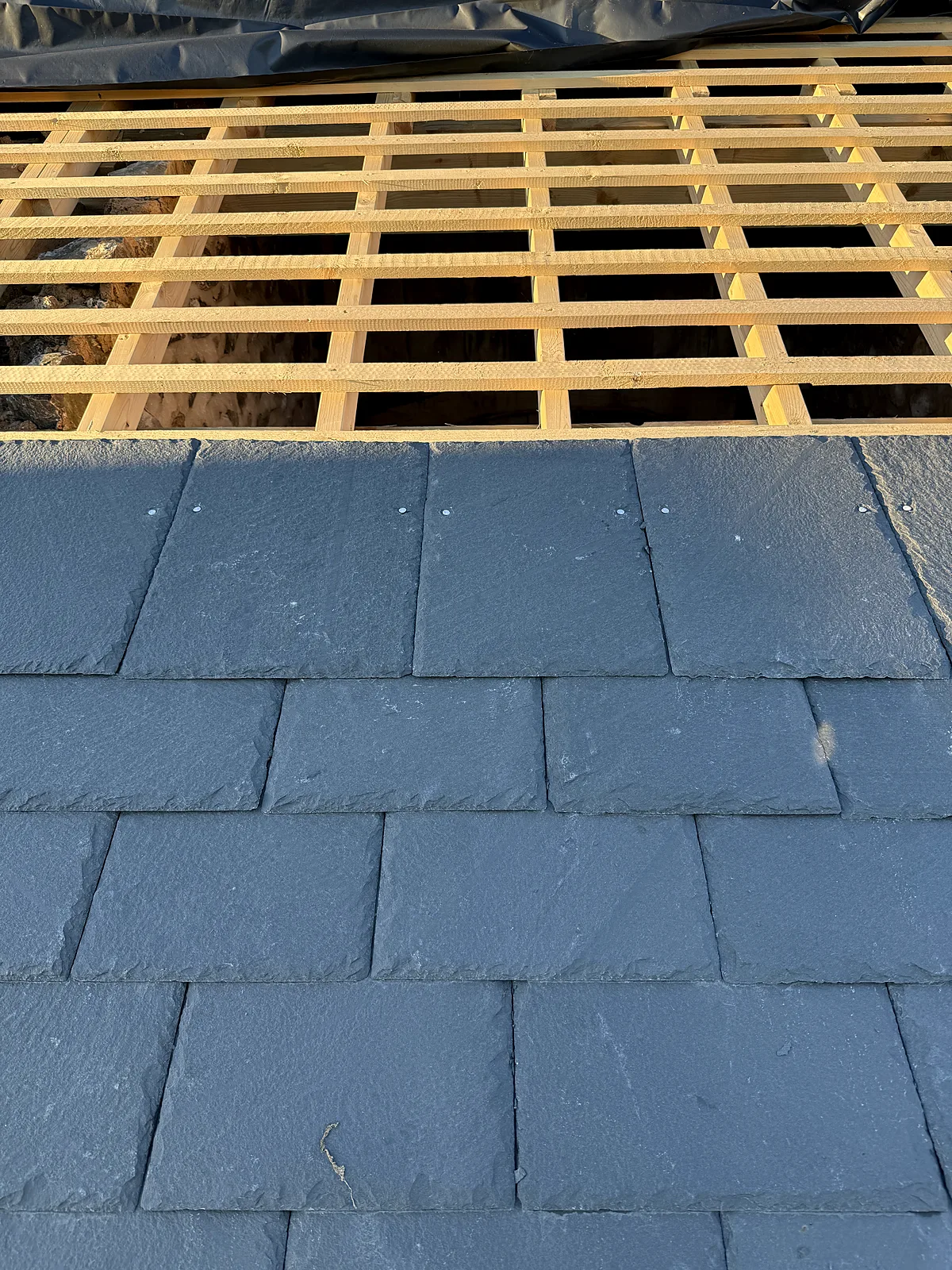
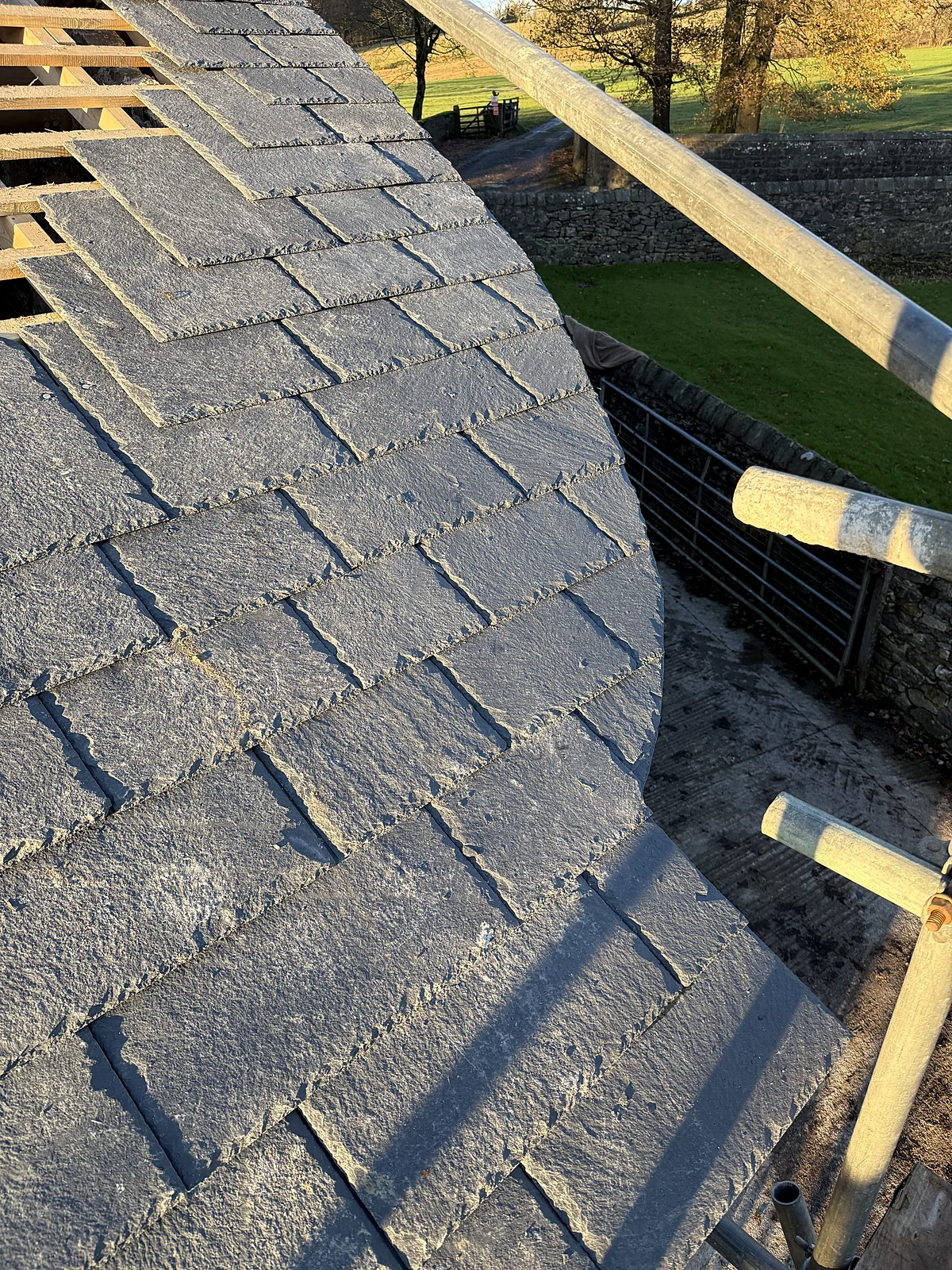
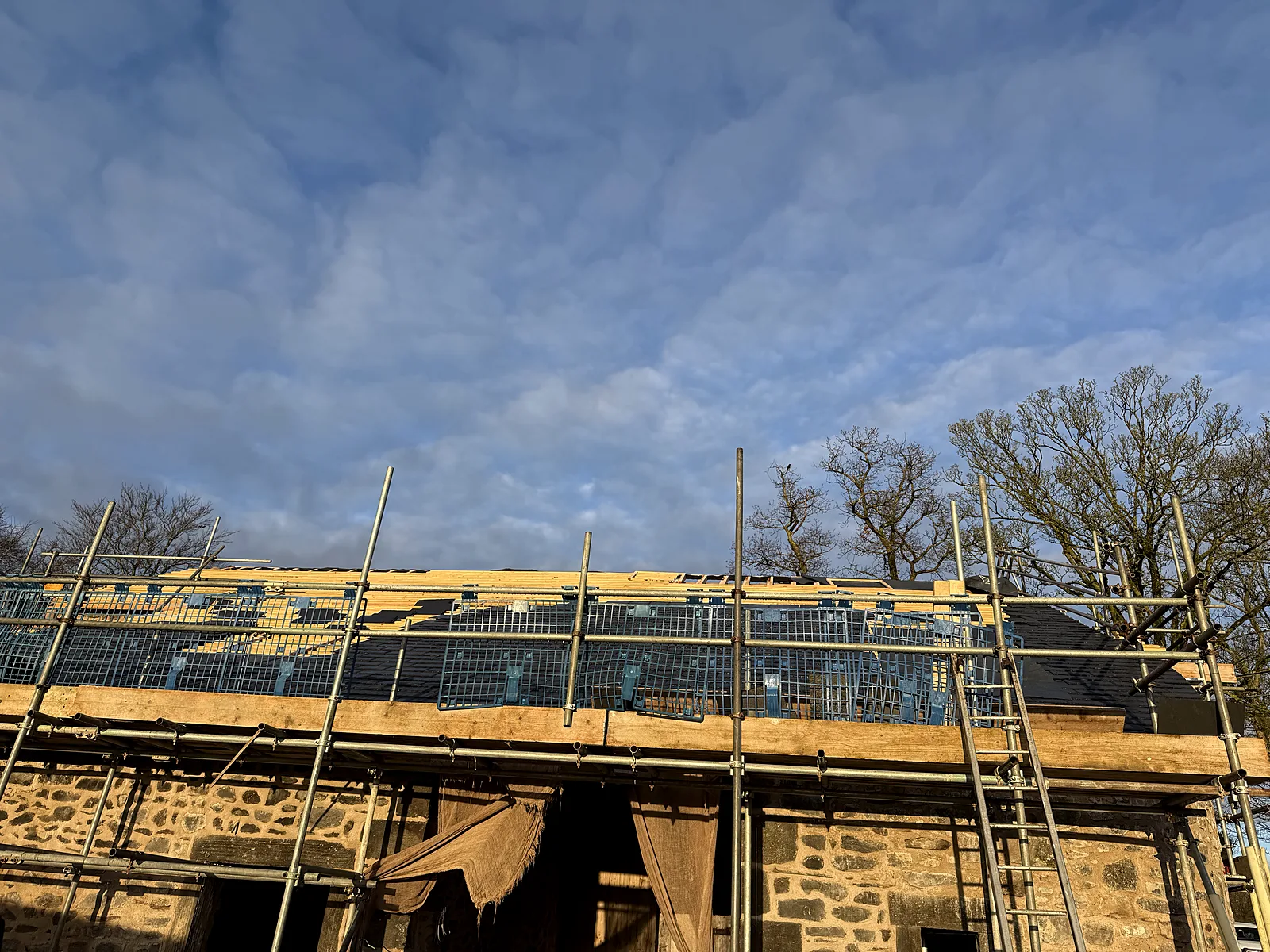
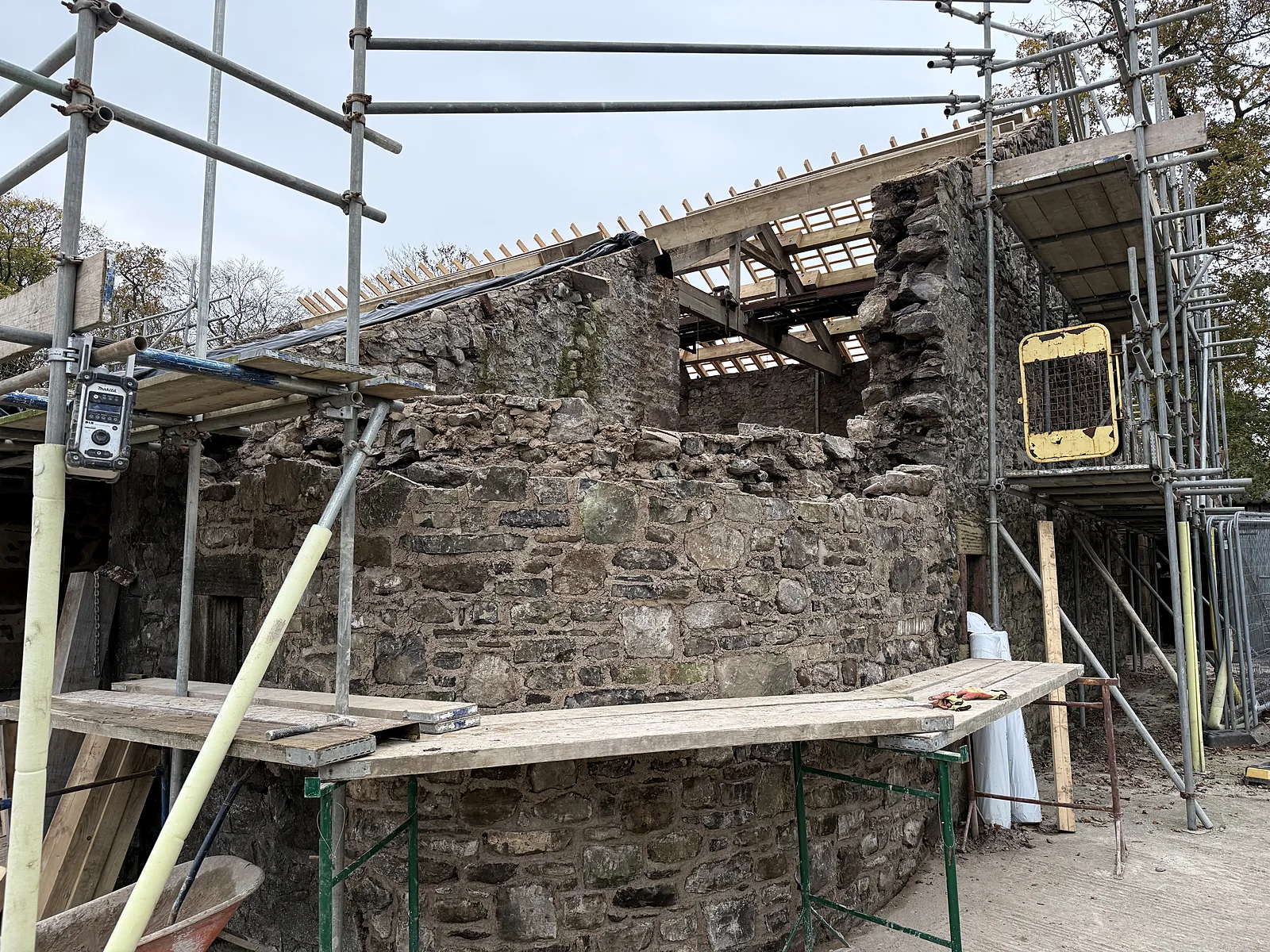
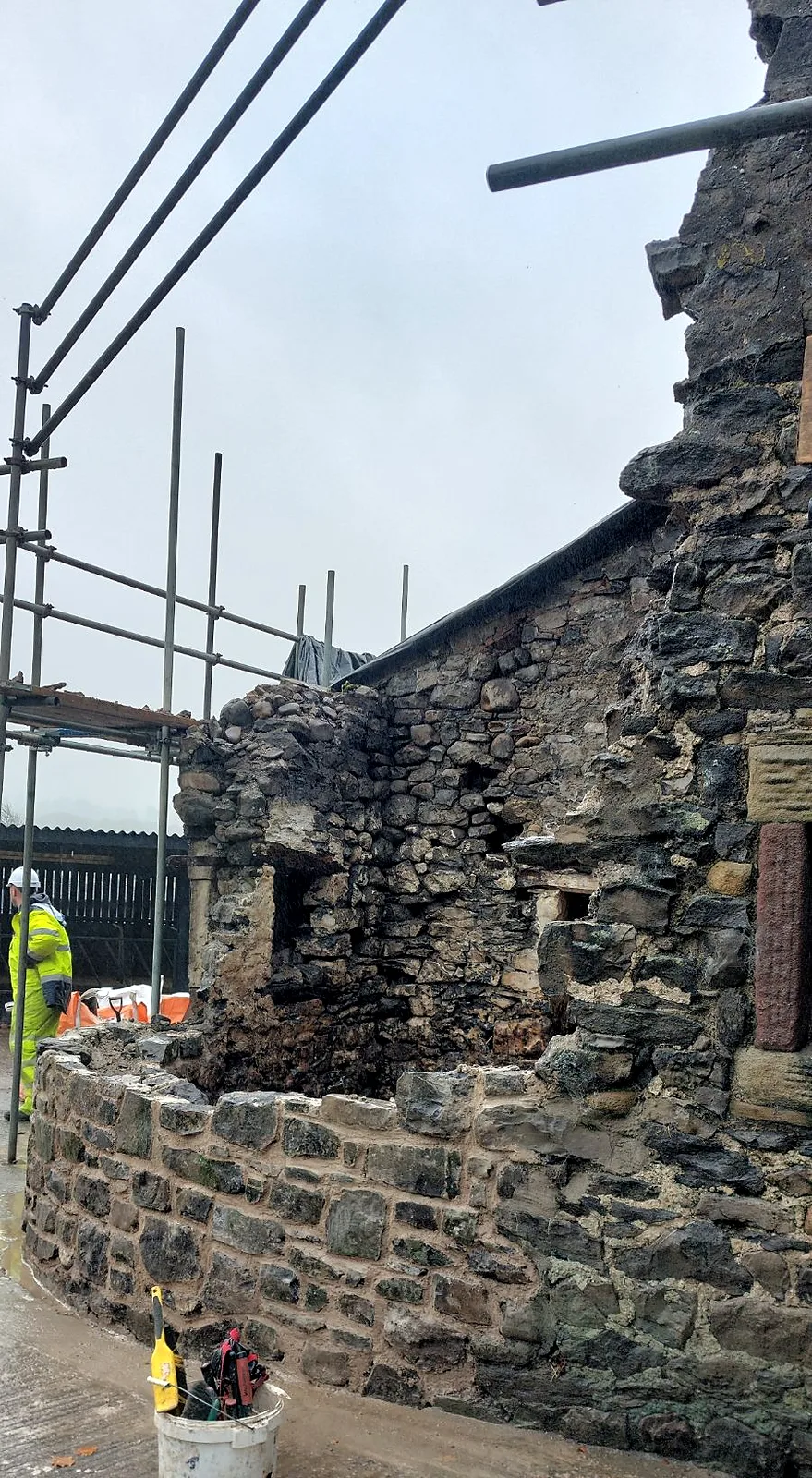
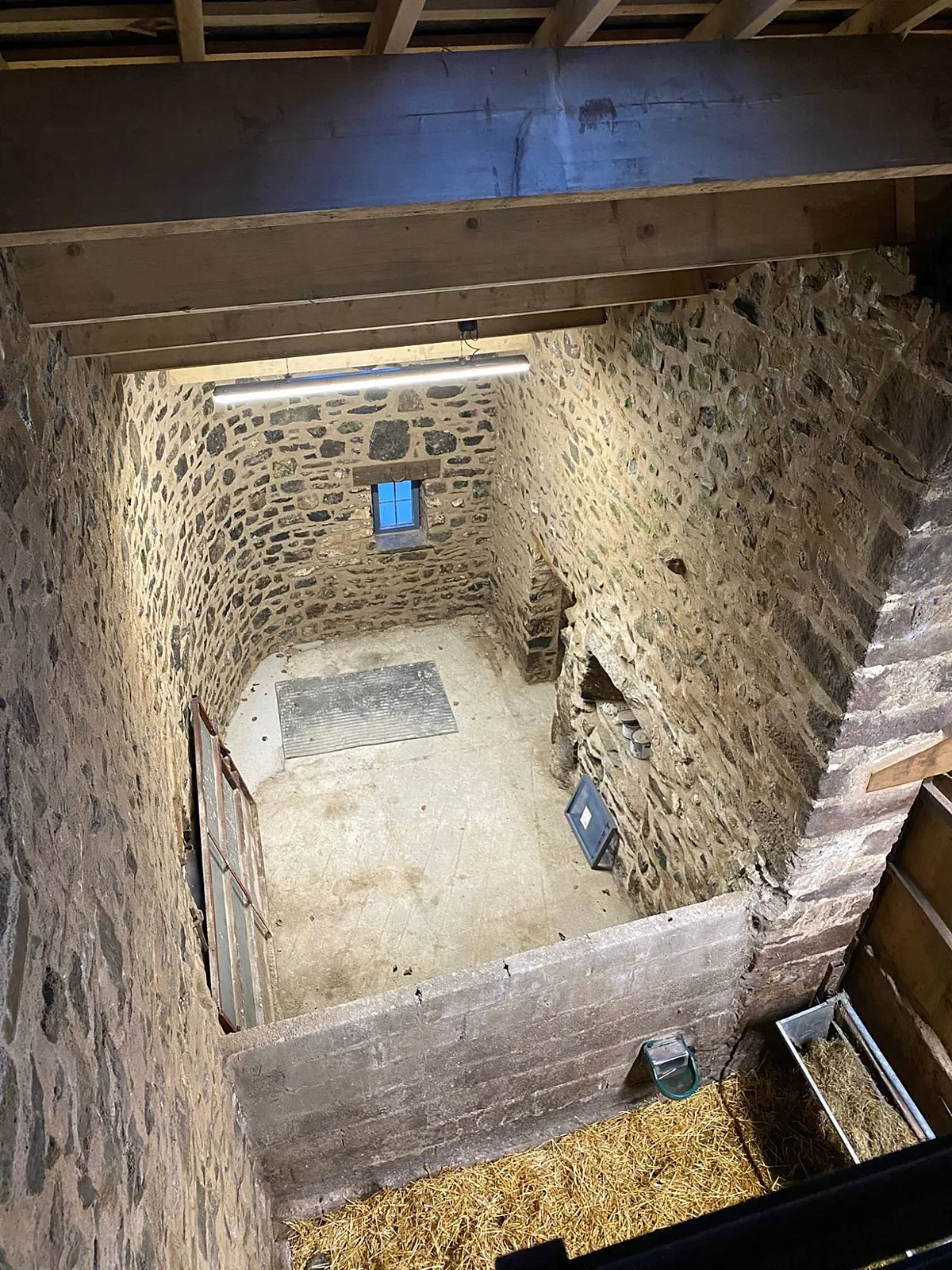
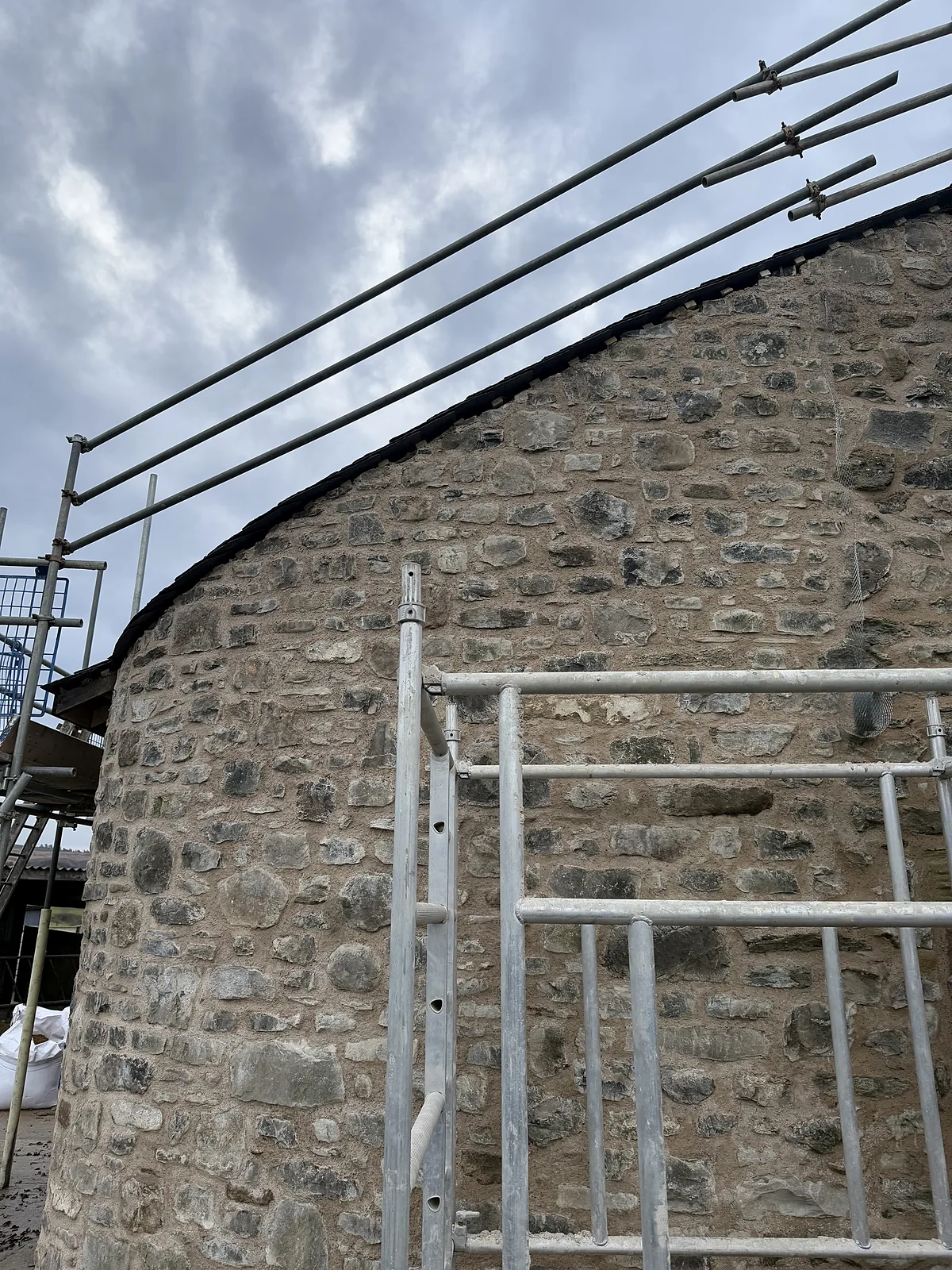
The work used traditional techniques throughout: original materials to match the historic architecture, repaired and reinforced structure, restored timber beams, and stone walls rebuilt and repointed in lime mortar. A curved section of wall that had partly collapsed was rebuilt stone by stone, and bat and swallow nest cups were added to give wildlife more places to roost and nest.
Throughout, we kept both the family and the funding body informed. The FiPL officer’s verdict:
“Been a pleasure to work with Lee, Cornerstone. Professional, high quality traditional barn restoration. Continuous communication with the client and the Forest of Bowland NL as the funding body (Defra funded). Would definitely recommend.” Tarja Wilson, FiPL Lead Officer, Forest of Bowland National Landscape
Doing heritage work properly
Funders want to see a historic building repaired in a way that keeps its character. In practice that means:
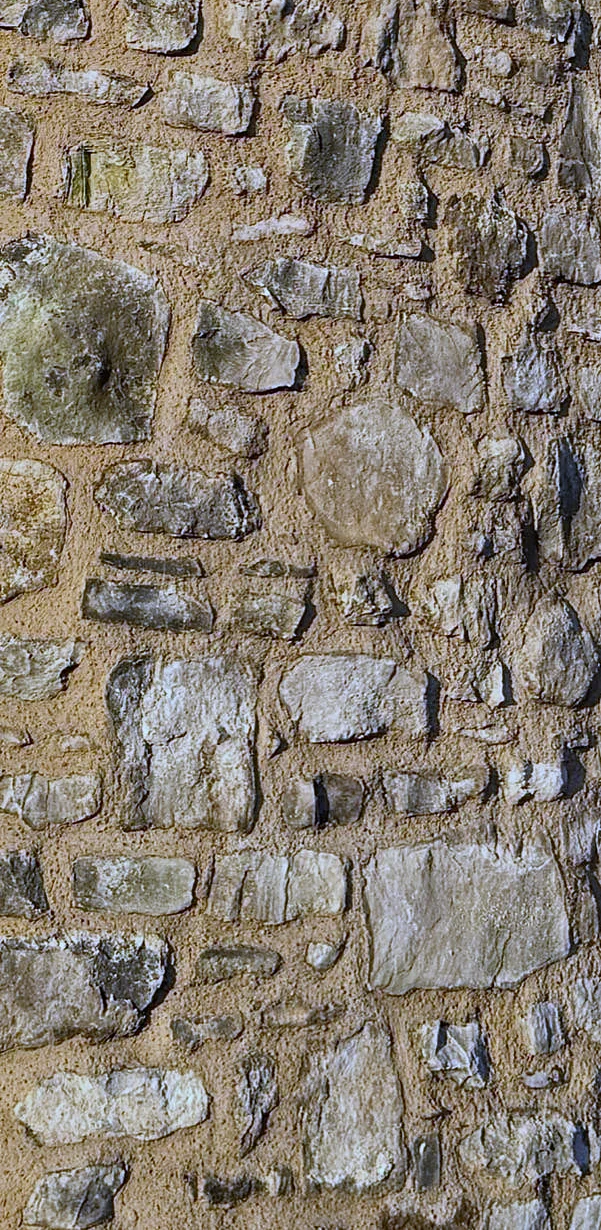
- Lime, not cement. Lime mortar lets old stone walls breathe and move. Cement traps moisture and can damage the stone around it.
- Repair before replace. Original timbers are kept and strengthened wherever they are sound, and new work is matched to them.
- Local materials. Stone and slate that match what is already there, so the building still belongs in its landscape.
- Room for wildlife. Old barns are often home to bats and birds, so their needs are planned into the work.
- Records. Measured photographs of what was there and what was done, which also support the funding process.
How we can help
We work alongside your architect, engineer and FiPL officer. We price the specification, carry out the works with traditional methods, keep the funding body informed and keep the photographic record your project needs. Because our group covers structural engineering, roofing and solar for farms, we can also advise on other work your buildings may need.
FiPL funding is limited and allocated locally, so start the conversation with your protected landscape team early. If you would like a contractor involved from the start, we are happy to visit.
Got a barn that needs saving?
Tell us about your building and whether you are applying for FiPL funding, and we will help you plan the survey, specification and works. Tell us about your project or call 0800 011 9758.
Power your business with solar.
Our renewables team designs, installs and maintains commercial solar, storage and EV charging across the North West and the UK.